
The U.S. Should Negotiate With Iran on One Issue Right Now
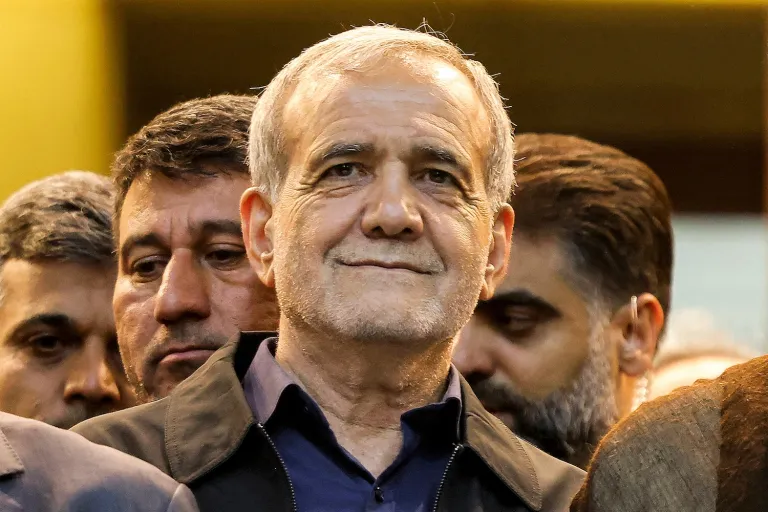
Iranian President-elect Masoud Pezeshkian has signaled an openness to resuming dialogue with Washington on nuclear matters, and senior figures in his administration have indicated their readiness to even negotiate with a future president Donald Trump—the man directly responsible for triggering the unraveling of the 2015 nuclear deal.
With elections looming in November, the Biden administration cannot offer Iran comprehensive assurances on outstanding issues, such as the nuclear deal, that extend beyond its term, especially as the specter of a second Trump presidency casts a dark pall of uncertainty over the deal’s future.
That means that the appetite for nuclear diplomacy will be limited for the next three and a half months, but Pezeshkian’s victory may create an opening for a more urgent matter: Washington and Tehran’s joint interest in preventing a full-blown war between Israel and Hezbollah in Lebanon.
PEZESHKIAN IS UNLIKELY to cause seismic shifts in Iran’s foreign policy. But given his campaign promises of improving the economy through sanctions relief and direct talks with the United States, as opposed to the previous government’s strategy of “sanctions neutralization” through increased non-dollar trade with Iran’s neighbors, there is an opening worth exploring.
In the short term, however, the main question is primarily one of political will, with the Biden administration so far showing little willingness to respond positively to the diplomatic opening in Tehran. White House spokesperson John Kirby responded to Pezeshkian’s election by flatly rejecting the idea of diplomatic engagement with the new government in Tehran, citing Iran’s support for Hamas, Hezbollah, the Houthis, and Russia in Ukraine.
But one looming crisis, involving one of those armed groups, is urgent for both sides and could prove to be a cataclysmic geopolitical event that could throw the entire Middle East into turmoil: the spillover of the Gaza war into Lebanon and a full-scale war between Israel and Hezbollah. According to the Alma Research and Education Center, a full-scale war would be catastrophic for both sides, with thousands of people likely maimed and killed on the Israeli side given Hezbollah’s formidable missile capabilities. Here, Pezeshkian’s victory provides an unexpected opportunity for a rapprochement between Iran and the United States.
A war of such scale will make it immeasurably difficult for the United States not to intervene militarily in support of Israel. Indeed, within days of Hamas’s Oct. 7 attack, Biden moved an aircraft carrier and other ships to the Eastern Mediterranean to deter Hezbollah from attacking Israel from the north.
Israel’s military operations in Gaza have demonstrated that the country’s armed forces are not prepared to fight a formidable fighting force like Hezbollah, which dwarfs Hamas in virtually every index of military strength, without the United States’ direct involvement in such a war. But direct U.S. military involvement in a Hezbollah-Israel war would inevitably bring U.S. military assets, including U.S. troops, into direct conflict with Hezbollah and its allies, such as Iran.