
On the Brink of a Great Explosion: Either Arab Unity Saves What Remains… or a Fire Consumes All
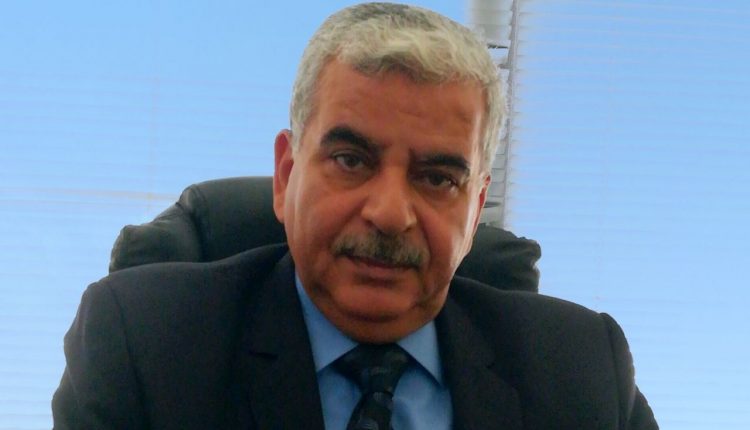
Muhi Al-Din Ghunaim :
The Arab landscape is no longer a collection of separate crises that can be managed as isolated files. It has become a blazing tableau in which wars, conflicts, and regional alignments intersect in ways that threaten a wide-scale explosion—one that could extend beyond the region to even more dangerous horizons.
From the disputes between Iraq and Kuwait over the Khor Abdullah waterway, to the devastating war and violent power struggle in Sudan, passing through the political and security chaos in Libya, the fragile situation in Syria, the repeated Israeli attacks on southern Lebanon, the ongoing war in Yemen, and the turmoil in Somalia—crises are piling up to the point that the region appears to be standing on the mouth of a volcano.
Amid this volatile environment, Israeli and American threats of launching a war against Iran are escalating, accompanied by a confrontational discourse from Israeli Prime Minister Benjamin Netanyahu about reshaping regional axes and expanding Israeli influence. Such rhetoric cannot be separated from a political project aimed at redrawing maps of influence at the expense of deep Arab division.
The pressing question is: Has the time not come for Arab states to realize that the continuation of internal disputes is no longer a political luxury, but an existential danger?
Experience has shown that an Arab vacuum generates external interventions, and that division opens the door to regional and international projects whose interests intersect over Arab geography. The deeper the rift between Arab capitals, the wider the space for foreign influence, and the weaker the ability to produce an independent decision that safeguards comprehensive Arab national security.
It is easy to place all the blame on one side, but reality is more complex. While Israel moves according to a strategic vision that serves its interests, and the United States views the region through the lens of protecting its allies and geopolitical priorities, internal Arab divisions, power struggles, and the absence of a unifying Arab project are fundamental factors that have deepened this fragmented reality.
The tragedy lies not only in the existence of external threats, but in the absence of a cohesive internal front capable of containing disputes through dialogue and building a regional Arab security framework that closes vulnerabilities before they turn into arenas for proxy wars.
Any direct confrontation between Israel and Iran would not remain confined to two states. The geography of engagement extends across Lebanon, Syria, Iraq, Yemen, and the Gulf—meaning that a single spark could ignite a chain reaction difficult to contain. In a world already suffering from sharp international polarization, the expansion of such a confrontation could open the door to wider clashes that transcend the region.
The only viable path at this stage is a comprehensive Arab project.
The call for unity is not an emotional slogan, but a strategic necessity. What is required is neither immediate integration nor ideological alignment, but rather:
An end to mutual media campaigns between Arab states.
The neutralization of border disputes through legal mechanisms and international arbitration.
The launch of a joint Arab national security initiative.
The strengthening of internal fronts through political and economic reform.
Preventing Arab states from becoming arenas for proxy conflicts.
History does not wait for the hesitant. Either this moment becomes a turning point toward rebuilding a more cohesive Arab order, or fragmentation will continue until all find themselves at the heart of a regional storm that spares no one.
The Arab world today stands at a true crossroads: either unity restores balance… or successive conflicts open doors that can never be closed.
The writer is from Jordan.