
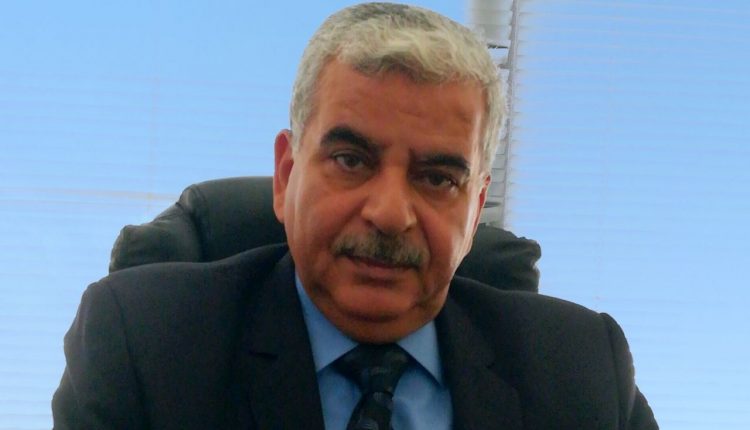
Rabbi Yosef Mizrachi’s Statement on Striking Al-Aqsa Mosque… A Call to Set the Region Ablaze and Blame Iran
By Muhi al-Din Ghunaim – Jordan
Amid unprecedented regional tensions, a statement attributed to Yosef Mizrachi has surfaced, circulating in a documented video, in which he allegedly speaks about the idea of directing a strike at the Al-Aqsa Mosque and then accusing Iran of carrying it out—thereby completely reshaping the axis of regional hostility.
Whether the statement was delivered exactly as reported, taken out of context, or distorted, the mere circulation of such an idea reflects an extremely dangerous level of thinking—one that plays on the most volatile chord of all: religion.
Al-Aqsa Mosque is not an ordinary geographic location that can be placed on a military target list. It is a religious and historical symbol for hundreds of millions of Muslims around the world. Any harm to it—or even the suggestion of using it as a pawn in political or military conflict—would effectively ignite a wide-scale regional explosion whose repercussions could not be contained.
The danger of such a proposition lies not only in the act itself, but in the underlying concept: manufacturing a shocking event and then assigning blame to a specific party in order to reshape alliances and generate overwhelming public outrage that pushes governments toward hardened positions. If accurate, this line of thinking falls within the most perilous scenarios of “psychological warfare” and “false flag operations” seen at various points in history.
The region today stands on the edge of acute tension between Israel and Iran, under leadership such as Benjamin Netanyahu, who places confrontation with Tehran at the forefront of his security priorities. In such an atmosphere, even extremist statements—if issued by individuals who do not represent official institutions—can serve as additional fuel for an already combustible conflict.
What is most alarming about such rhetoric is the ease with which sacred symbols are invoked for political or military gain. When religious symbols are dragged into the battlefield, confrontation no longer remains confined to geography; it transforms into a struggle of identity and existence—one that is exceedingly difficult to control or contain.
What is required today is neither amplifying individual statements nor treating them as unquestionable facts, but approaching them with caution and responsibility. The uncritical circulation of such ideas may—intentionally or unintentionally—serve agendas of escalation and further inflame public tension.
The region does not need a “sacred spark” to ignite a comprehensive war. It needs political rationality, transparent investigations into any incident, and a firm rejection of any calls that target holy sites or attempt to weaponize them in power struggles.
Sacred places are not instruments of pressure. Any attempt to turn them into political weapons will not burn a single adversary—it may well set the entire region on fire.