
Statements by Mike Huckabee Between Political Exaggeration and the Collapse of Legal Legitimacy
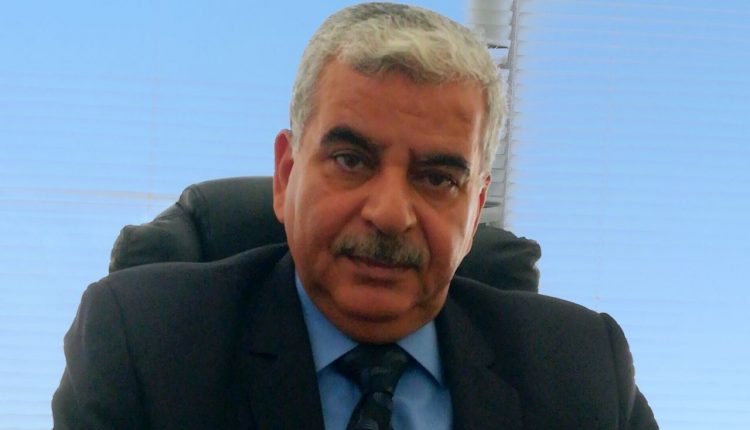
By Mohi al-Din Ghunaim
At a highly sensitive regional moment, the statements attributed to the U.S. Ambassador to Israel, Mike Huckabee, regarding “control over the entire Middle East” have sparked a wave of legitimate concern—not only on the political level, but also with respect to international law and the foundations of the contemporary global order.
If accurate, such language cannot be dismissed as a mere slip of the tongue or a personal interpretation. It strikes at the core principle of state sovereignty and the prohibition against the acquisition of territory by force—a principle upon which the United Nations system has been built since 1945 and which has been reaffirmed in dozens of international resolutions related to the Arab-Israeli conflict.
International law is not a matter of opinion. The founding Charter of the United Nations is explicit in prohibiting the threat or use of force against the territorial integrity or political independence of any state. Moreover, United Nations Security Council resolutions concerning the occupied Palestinian territories have repeatedly emphasized the illegality of annexation or the imposition of faits accomplis by force.
Accordingly, any discourse about “expansionist projects” or “grand maps” moves beyond political rhetoric into direct confrontation with international law. Regional conflicts are not resolved through ideological declarations, but through negotiations and adherence to international legitimacy.
If placed within its broader context, such statements also appear to contradict previously declared positions of U.S. President Donald Trump regarding opposition to unilateral annexation steps in the West Bank. The U.S. administration—regardless of its political orientation—remains obligated to maintain consistency between its diplomatic discourse and its international commitments.
The discrepancy between calls for “regional stability” on one hand and hints at projects of geographic dominance on the other undermines the credibility of American discourse in the region and reinforces perceptions of double standards.
Today, the Middle East stands on the brink of accumulated tensions—whether in Gaza, Lebanon, the Red Sea, or amid the escalation between Israel and Iran. In such a climate, political language carries exceptional weight; words can ignite what weapons fail to contain.
Persisting in the use of terminology related to control or redrawing maps serves only to deepen polarization and undermines any opportunity to build a political track based on the two-state solution or on balanced regional security arrangements.
An ambassador is not a political activist, but an official representative of a major state, expected to uphold the highest standards of diplomatic discipline. Any deviation from this role negatively affects the image of the state he represents and its capacity to act as a mediator or guarantor in conflicts.
Therefore, the most appropriate response to such statements is not emotional reaction, but a firm reiteration of legal constants: respect for state sovereignty and adherence to international legitimacy as the foundation for any settlement.
The region does not need imagined maps, but a genuine commitment to international law. It does not need expansionist slogans, but a political path that guarantees the legitimate rights of all peoples.
The strength of nations is not measured by their ability to impose facts on the ground, but by the extent to which they respect the rules governing relations among states. Any discourse that transcends these rules—no matter how elevated its tone—remains devoid of political or legal legitimacy in a world that is presumed to be governed by the rule of law, not the logic of force.
The writer is from Jordan.